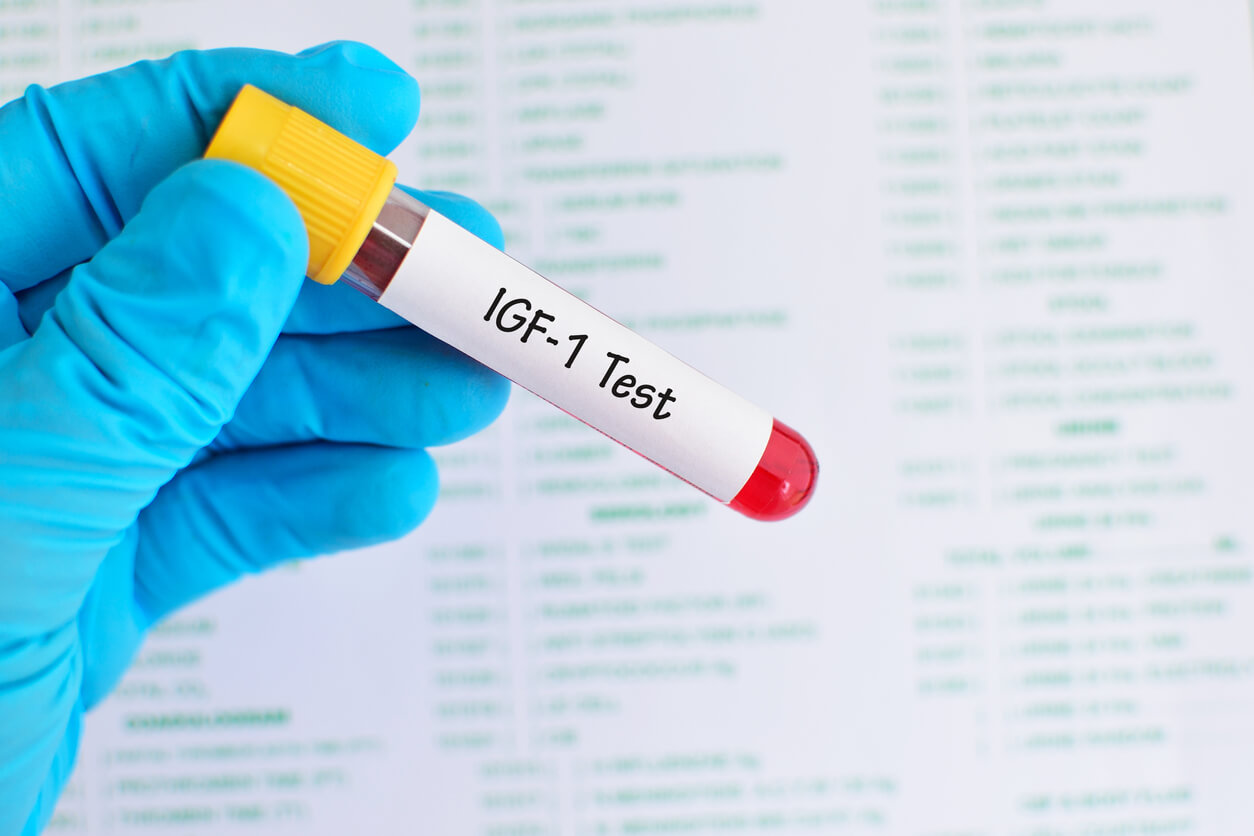
Adult onset or “age-related” growth hormone deficiency, both abbreviated “AGHD” is a real medical condition. However, it is a little more complicated to diagnose than other age-related hormone issues like low testosterone. Rather than a simple blood test that measures the amount of human growth hormone (HGH) in your blood, HGH lab tests are designed to look at how well your body is or is not producing HGH.
Let’s look at how our doctors test for and diagnose HGH issues in adults, how to interpret those results, and how we treat GHD.
How Is HGH Deficiency Diagnosed in Adults: HGH Blood Tests and More
If you over 40 and have been feeling “off” for a while, you are not alone. Many adults notice changes like low energy, more body fat, less muscle tone, weaker recovery, poor sleep, and brain fog. When these changes stack up, it is normal to wonder if your growth hormone level has dropped with age.
The good news is this, hormone lab testing can determine if HGH decline is the root of the problem. At The HGH Therapy Doctor, we use a step-by-step process that helps you understand what is happening in your body and what to do next.
The Most Common Blood Tests for Diagnosing Growth Hormone Deficiency
Growth hormone is released in “bursts,” not in a steady stream. That is one reason testing has to be done in a very specific way. Instead of relying on a single random growth hormone blood draw, doctors often use two key tools, IGF-1 testing and growth hormone stimulation testing.
These tests work together to give a more complete picture of your growth hormone activity and your pituitary function.
IGF-1 testing: the most common starting point
IGF-1 is a blood marker that reflects growth hormone activity over time. Think of it like a “steady mirror” of what your growth hormone system has been doing recently.
A simple IGF-1 blood draw can be a strong first step because it is stable and easy to measure. It can also be used later to help track how your plan is working.
How Do I Prepare for an IGF-1 Test?
Preparing for and IGF-1 test is simple and usually requires no special preparation. Unlike some HGH blood tests, an IGF-1 test generally does not require fasting or any other special steps.
IGF-1 levels remain relatively stable throughout the day, so your blood can usually be drawn at any time. However, there are a few things to keep in mind before your test.
-
Medications: Tell your doctor about any medications you take, especially hormones or other treatments that could affect your IGF-1 levels.
-
Supplements: Let your doctor know about any vitamins, nutritional supplements, or other products you use.
-
Medical Conditions: Inform your doctor about any existing medical conditions that could affect your hormone levels.
-
Follow Instructions: Your doctor may provide specific preparation instructions based on your medical history or if other blood tests are being performed at the same time.
An IGF-1 blood test is a simple, valuable tool for evaluating growth hormone activity. Following your doctor’s instructions helps ensure accurate results and allows your healthcare provider to determine whether additional testing or treatment may be appropriate.
What Are the Normal IGF-1 Levels in Adults?
There is no single normal IGF-1 level that applies to every adult. Healthy levels change with age and may also differ between men and women. IGF-1 is usually highest during the teen years and early adulthood. It then tends to fall slowly as a person gets older.
However, as a general rule, most labs list adult male ranges of about 155 to 432 ng/mL from ages 21 to 30, 121 to 237 ng/mL from ages 41 to 50, and 60 to 220 ng/mL from ages 61 to 70.
Female ranges are about 87 to 368 ng/mL, 118 to 298 ng/mL, and 75 to 263 ng/mL for those same age groups. These numbers are examples only and should not replace the range on a patient’s own report.
What Could it Mean If You Have HIGH IGF-1 Levels?
High IGF-1 levels may indicate that your body is producing more growth hormone than it needs. IGF-1 is a hormone produced mainly by the liver in response to HGH. Doctors often measure IGF-1 because it provides a more consistent picture of growth hormone activity than a single HGH blood test.
Higher-than-normal IGF-1 levels can have several possible causes. These include:
- Excess Growth Hormone Production: Certain conditions can cause the pituitary gland to release too much HGH.
- Acromegaly: This rare condition occurs when the body produces excessive growth hormone, usually because of a noncancerous pituitary tumor.
- HGH Therapy: Patients receiving HGH injections may have elevated IGF-1 levels if their prescribed dose is higher than their body needs.
- Other Factors: Age, pregnancy, and certain health conditions can also influence IGF-1 levels.
If you are receiving HGH therapy, regular IGF-1 testing helps your doctor monitor your response and adjust your dosage when necessary.
A high IGF-1 result does not automatically mean you have a serious medical condition. Your doctor will consider your age, symptoms, medical history, and other test results before determining whether further evaluation or treatment is needed.
What Could it Mean if You Have LOW IGF-1 Levels?

Low IGF-1 levels may be an indication that your body is not producing enough human growth hormone. Since HGH stimulates the production of IGF-1, lower levels of this hormone can be an important warning sign of possible growth hormone deficiency (GHD).
In adults, low HGH levels may contribute to several symptoms associated with aging, including reduced muscle mass, increased body fat, low energy, and decreased bone strength.
However, low IGF-1 levels can have other causes, including:
- Age-Related Changes: IGF-1 levels naturally decline as men and women grow older.
- Poor Nutrition: Not getting enough calories or protein can reduce IGF-1 production.
- Other Medical Conditions: Liver disease, poorly controlled diabetes, and certain hormonal problems can affect IGF-1 levels.
- Medications: Certain medications, including oral estrogen therapy, may lower IGF-1 levels.
An IGF-1 test alone cannot provide a definitive diagnosis of adult growth hormone deficiency. Your doctor may recommend additional hormone testing, including a growth hormone stimulation test, to determine the underlying cause.
For adults diagnosed with growth hormone deficiency, prescription HGH therapy can help restore appropriate hormone levels and may improve body composition, muscle strength, and overall quality of life. With proper testing and ongoing medical supervision, treatment can be tailored to each patient’s individual needs.
Growth Hormone Stimulation Testing: a deeper confirmation test
A stimulation test checks how well your pituitary gland can “respond” when your body is prompted to release growth hormone.
During this test, you are given medication that signals your body to release growth hormone. Then blood samples are taken at set times to see how strongly your level rises.
This type of test can be especially helpful when a clear answer is needed, or when your doctor wants to confirm the full picture before moving forward.
Other labs often ordered alongside HGH testing
Your doctor may also check other markers that affect how you feel day to day. These labs do not replace HGH testing, but they help your provider build a complete plan. This can include basic metabolic labs and other hormone panels, so your symptoms are evaluated from every angle.
What Are the Normal HGH Levels for Adult Men and Women?
This is one of the most common questions, and the most important answer is simple:
“Normal” depends on the test, your age, and the lab’s reference range.
Here is why:
- Growth hormone levels can rise and fall quickly, even within the same day.
- IGF-1 ranges change by age, and reference ranges are often adjusted by sex, too.
- Different labs use different testing methods, which can slightly change what is considered “in range.”
So instead of chasing a single number you found online, the best approach is to review your results with a physician who understands how to interpret them in context.
At The HGH Therapy Doctor, we focus on what your results mean for you, not just what a number says on paper.
What If My Results Indicate Adult HGH Deficiency?
Your results help answer two big questions:
- Is your growth hormone activity lower than expected for your age?
- Do your symptoms match what the labs are showing?
If both align, it can point toward an HGH deficiency pattern that is worth treating. If they do not align, your doctor may look at other drivers that can cause similar symptoms, so you still get answers and a plan that fits.
This is also why your follow-up visit matters so much. Your physician will not just “hand you lab numbers.” They will explain what they mean, what stands out, what looks healthy, and what steps make sense next.
The goal is clarity and direction.
How Do We Treat Growth Hormone Deficiencies?
If your testing supports it, treatment is built around a personalized HGH therapy plan that fits your body and your goals.
At The HGH Therapy Doctor, care is guided and measured. That means:
- The dose is selected carefully for you
- Progress is tracked over time
- Your plan is adjusted based on how you feel and how your body responds
- Follow-up testing may be used to confirm you are on the right track
This is not a one-size-fits-all approach. It is a physician-led program designed to help you feel better in a steady, reliable way.
What Kind of Results Could I Expect From Growth Hormone Therapy?
While every person’s timeline is different, many adults describe improvements like:
More daily energy
Better recovery after workouts
Stronger lean muscle support
Easier fat control
Better sleep quality
Improved mental sharpness.
Many people also report a better overall sense of well-being and motivation once their body feels “supported” again.
Lab Testing Not Only for Diagnosis, But for Monitoring
One of the biggest reasons people choose a specialty clinic is monitoring. This is not a therapy you want to do casually. You want it done with skill and structure.
Monitoring means your doctor checks how your body is responding, and then adjusts the plan as needed. That includes:
- Reviewing how you feel in real life (energy, sleep, recovery, body changes, mood)
- Checking key lab markers over time
- Making dose changes when needed to keep progress smooth and steady
- Helping you stay consistent, because consistency is where results come from
This is also where a lot of confidence comes in. When you know a physician is tracking your progress, you stop feeling like you are guessing. You feel guided.
Is Growth Hormone Therapy Right for Me?

This is one of the most important questions you can ask. And it deserves a real, clear answer! Growth hormone therapy is right for you when three things line up:
- You have symptoms that match a low growth hormone pattern
- Your testing supports the diagnosis
- You want a physician-guided plan designed for safe, steady results
If those three pieces fit, HGH therapy can be an excellent way to start feeling yourself again!
Many adults live with low growth hormone symptoms for years before they realize there is a name for what they are feeling. They often assume it is “just aging” and try to push through it. But deep down, they know something has changed.
Common signs that can point toward age-related growth hormone deficiency include:
- You feel tired even after sleep.
- You feel weaker than you used to.
- Your workouts do not seem to help much.
- Your overall exercise capacity drops
- Your body holds onto fat more easily.
- Your muscles feel softer.
- Your mood feels dull.
- Your mind feels foggy.
These symptoms can impact your quality of life in a big way. They also often affect confidence. You might feel like you are losing your edge.
However, proper lab testing as we have been discussing is the only way to know if growth hormone therapy is really right for you. At The HGH Therapy Doctor, this process is designed to be simple and supportive. Testing typically starts with IGF-1, and when needed, your provider may recommend a stimulation test to confirm the full picture.
Once testing is complete, you do not just get a number. You get a clear review and an action plan. That is where most patients feel the biggest shift. They stop guessing. They stop wondering if it is “all in their head.” They finally have something concrete to work with.
What if I’m not sure yet?
If you are still not sure, that is completely normal. You do not need to decide today. However, if you recognize any of the symptoms above and think you might be suffering from lower than normal HGH levels, the smartest first step is still testing. Testing gives you facts. Facts create clarity. Clarity makes the decision easier. Even if you are on the fence, a simple consultation and lab review can help you understand your options and feel confident about your direction.
Why Come to The HGH Therapy Doctor to Have Your HGH Tested?
HGH testing and treatment work best when the provider knows exactly what to look for and how to guide the next step.
At The HGH Therapy Doctor, our focus is simple. We help adults identify low growth hormone patterns, understand their lab results, and move into a personalized treatment plan designed to maximize success and minimize side effects or adverse events.
Patients choose us because we make the process easy to understand, we treat you like a real person and we build plans that are careful, customized, and focused on results!
If you are ready to stop guessing and start getting answers, why not contact us today, and join the many others who have learned how HGH therapy can put you on the path to peak performance at any age!