
Perimenopause can cause changes throughout a woman’s body as hormone levels begin to shift in the years leading up to menopause.
For some women, the first sign is a change in their monthly period. For others, it may be hot flashes, poor sleep, weight changes, mood swings, brain fog or a lower interest in sex.
There is no single way that perimenopause feels. Symptoms can be mild for one woman and much harder to manage for another. They can also change from month to month as hormone levels rise and fall.
This is one reason why women in their 40s sometimes feel like they are dealing with many unrelated problems at the same time. Understanding the signs of perimenopause can help you recognize what may be happening and decide when it is time to speak with a doctor about hormone testing, hormone replacement therapy (HRT) or other treatment options.
What Is Perimenopause?
Perimenopause is the transition period that occurs before menopause.
It is the stage when the ovaries gradually begin to change how they produce estrogen and progesterone. Ovulation may become less regular, and hormone levels may rise and fall more sharply than they did during a woman’s younger years.
These hormone changes can affect much more than your menstrual cycle.
Estrogen and progesterone have effects throughout the body. Changes in these hormones can influence body temperature, sleep, mood, memory, vaginal health, sexual function, skin, hair and the way the body stores fat.
Perimenopause most often begins during a woman’s 40s. However, some women notice changes earlier, while others do not develop clear symptoms until later.
The length of perimenopause also varies. It can continue for several years before a woman reaches menopause.
One of the most common early signs is a change in menstrual periods. A woman who previously had a predictable cycle may notice that periods are suddenly closer together, farther apart, heavier, lighter, longer or shorter. She may also begin to experience symptoms such as hot flashes, trouble sleeping, fatigue or mood changes.
Perimenopause does not mean that your ovaries have stopped working. You may still ovulate, and pregnancy can still occur.
Instead, perimenopause is best thought of as a gradual hormonal transition from the reproductive years to menopause.
What Is the Difference Between Perimenopause and Menopause?
Perimenopause and menopause are related, but they are not the same stage of life. Perimenopause is the time leading up to menopause. During perimenopause, hormone production becomes less predictable. Menstrual periods usually continue, although they may become increasingly irregular.
Menopause is reached when a woman has gone 12 straight months without having a menstrual period and there is no other medical reason for the lack of periods. That means menopause is technically a point in time rather than a long period of changing hormones.
After menopause has been reached, a woman enters the postmenopausal stage.
An easy way to understand the difference is:
- Perimenopause: Hormones are changing and periods may become irregular.
- Menopause: A woman has completed 12 straight months without a menstrual period.
- Postmenopause: The years that follow menopause.
Many symptoms people commonly call “menopause symptoms” actually begin during perimenopause. In fact, some women notice their greatest hormone swings during the years before their final menstrual period.
This is why a woman does not have to wait until her periods have completely stopped to talk with a doctor about her symptoms.
How Do Perimenopause Symptoms Differ From Menopause Symptoms?
Perimenopause and menopause can cause many of the same symptoms. Hot flashes, night sweats, sleep problems, mood changes, brain fog, vaginal dryness and sexual changes can occur during either stage.
The biggest difference is often how unpredictable symptoms can be during perimenopause. Hormone levels do not simply decline in a straight line. Estrogen may be lower one month and higher the next. Ovulation may occur during one cycle but not another. Progesterone production can also change as ovulation becomes less regular.
These fluctuations can create symptoms that seem to come and go. A woman may feel good for several weeks and then suddenly have several days of poor sleep, hot flashes, headaches or mood changes. Menstrual changes are also much more common during perimenopause because periods have not yet stopped.
After menopause, monthly periods are no longer expected. However, some symptoms, particularly hot flashes and vaginal or urinary symptoms, can continue. Vaginal dryness and urinary symptoms can sometimes become more noticeable after menopause because estrogen remains lower.
Every woman’s experience is different. The important point is that bothersome symptoms do not have to be ignored simply because menopause has not yet occurred.
What Causes Perimenopause Symptoms?
Perimenopause symptoms are mainly caused by changes in the hormones that normally regulate a woman’s reproductive cycle. Estrogen and progesterone are two of the most important hormones involved.
During the reproductive years, hormone levels generally rise and fall in a fairly predictable pattern each month. As a woman enters perimenopause, this pattern can become much less predictable. Ovulation may happen less often. Estrogen may rise sharply and then fall. Progesterone production may decrease when ovulation does not occur. These changing hormone levels can affect different parts of the body.
Estrogen, for example, has effects on the brain, bones, skin, vaginal tissues and the systems involved in body temperature. This helps explain why changing estrogen levels can be linked to symptoms that appear unrelated at first.
This is exactly why a proper medical evaluation is important. A doctor can look at your symptoms, health history, menstrual cycle and other possible factors rather than assuming every new symptom is automatically caused by perimenopause.
The 34 Symptoms of Perimenopause
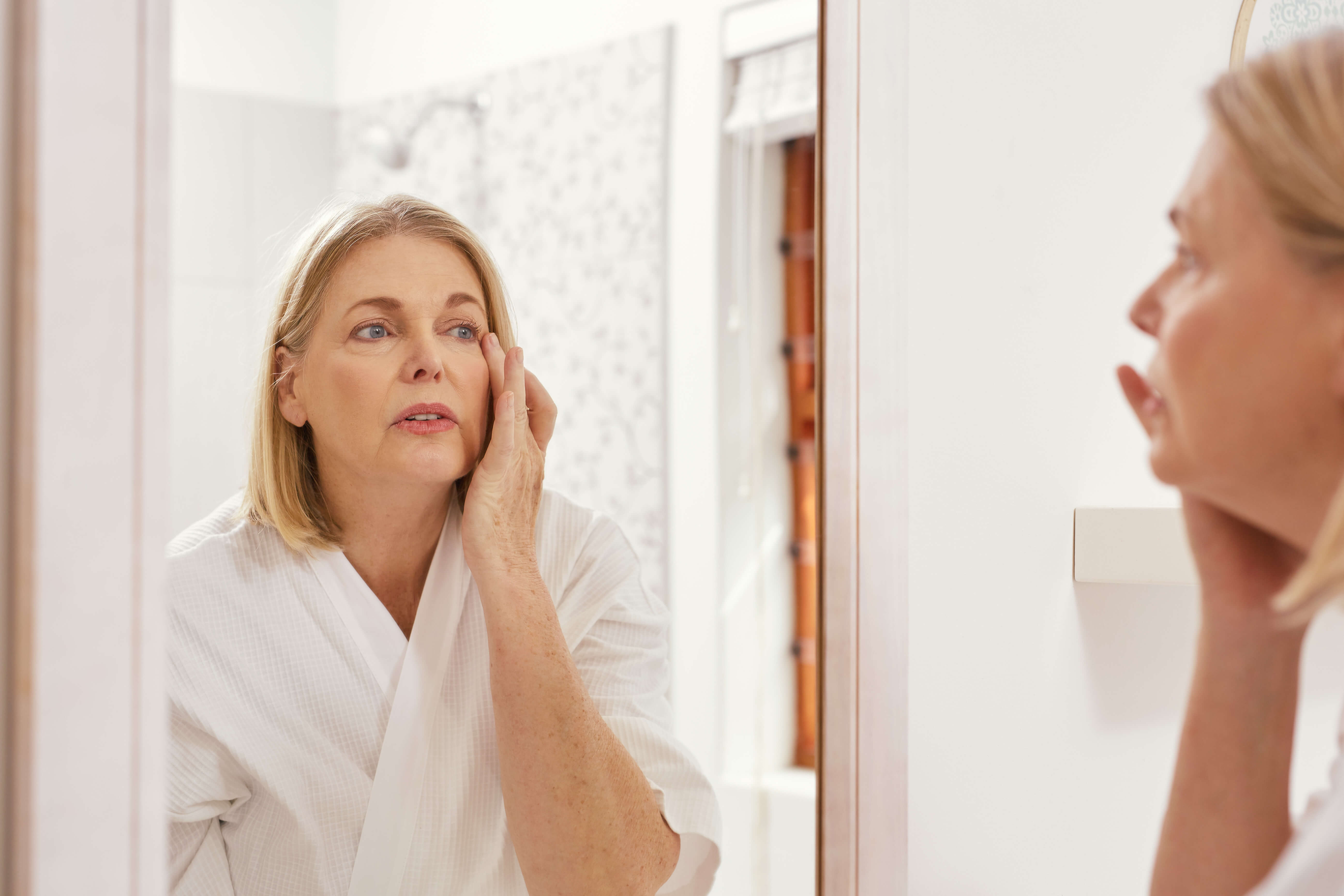
Perimenopause can affect many different areas of the body.
The phrase “34 symptoms of perimenopause” has become a common way of describing the wide range of changes women may experience. There is not one official medical checklist that every woman must follow, and some broader lists include additional symptoms.
For this reason, the following checklist includes 34 distinct signs and symptoms that may occur during the perimenopause transition.
Perimenopause symptoms can be grouped into three broad categories: neuroendocrine symptoms involving the brain, nerves and temperature control; physical symptoms; and vulvovaginal and urinary symptoms.
Neuroendocrine Symptoms
Changes in hormones can affect sleep, body temperature, mood, memory and the nervous system.
Common symptoms include:
- Hot flashes
- Night sweats
- Difficulty sleeping or insomnia
- Mood swings
- Anxiety or feelings of nervousness
- Periods of low mood
- Brain fog
- Memory lapses or increased forgetfulness
- Difficulty concentrating
- Headaches or changes in migraine patterns
- Dizziness or feeling lightheaded
Physical Symptoms
Hormonal changes can also affect menstrual cycles and many areas of physical health.
Possible physical signs include:
- Irregular menstrual periods
- Periods that become heavier or lighter than usual
- Breast tenderness
- Fatigue or lower energy
- Joint aches or stiffness
- Muscle aches
- Weight gain or changes in where body fat is stored
- Bloating
- Heart palpitations or a feeling that the heart is racing
- Dry skin
- Itchy skin
- Hair thinning or increased shedding
- Brittle nails
- Dry or irritated eyes
Vulvovaginal and Urinary Symptoms
Lower or changing estrogen levels can affect vaginal tissue, sexual comfort and urinary function.
Possible symptoms include:
- Vaginal dryness
- Vaginal or vulvar burning
- Genital itching or irritation
- Pain or discomfort during sex
- Reduced natural lubrication or arousal
- Lower sexual desire
- Increased urinary urgency
- More frequent urination, including nighttime urination
- Recurring urinary tract infections
A woman does not need to have all of these symptoms to be experiencing perimenopause.
Some women have only a few. Others experience symptoms from several different categories.
The severity can vary as well.
A mild hot flash that occurs once in a while may have very little effect on daily life. Frequent night sweats that interrupt sleep several times each night can have a much greater impact on energy, concentration, mood and quality of life.
The same is true for sexual and vaginal symptoms. Mild dryness may be an occasional problem, while more significant changes can make sex uncomfortable and affect intimacy.
Tracking your symptoms can make it easier to discuss them with your doctor. It may be helpful to write down changes in your menstrual cycle, sleep, hot flashes, mood, energy and other symptoms for several weeks or months.
Patterns that seem confusing from day to day may become easier to recognize when viewed over time.
How Are Perimenopause Symptoms Treated?
Perimenopause symptoms can often be managed with a treatment plan designed around the symptoms that are affecting you most.
There is no single treatment program that is right for every woman.
Some women mainly need help with hot flashes and night sweats. Others are most concerned about poor sleep, vaginal dryness, sexual changes or irregular periods.
A complete evaluation may include a discussion of:
- Your age and menstrual history
- The symptoms you are experiencing
- How long those symptoms have been occurring
- Your personal and family medical history
- Medications and supplements you take
- Sleep and stress
- Diet and exercise habits
- Sexual and vaginal symptoms
- Other health concerns
Blood testing may sometimes be used to evaluate hormone levels or look for other problems that could cause similar symptoms.
However, hormone levels can fluctuate during perimenopause. A doctor should interpret laboratory results together with your symptoms and medical history rather than relying on one number alone.
Treatment may include lifestyle changes, symptom-specific therapies, hormone therapy or a combination of approaches.
Regular physical activity can help support muscle, bone and metabolic health. Strength training becomes especially important as women age because maintaining muscle can support strength, mobility and body composition.
Good sleep habits, a balanced diet and stress management may also help improve overall wellbeing.
Women with vaginal dryness may benefit from vaginal moisturizers or lubricants. Prescription vaginal therapies may be considered when symptoms are more persistent.
When hormone changes are producing significant symptoms, hormone replacement therapy may also be considered.
HRT and Perimenopause Symptoms

Hormone replacement therapy (HRT) can be one of the most effective ways to address many bothersome symptoms associated with the menopause transition. HRT works by replacing or supporting hormones that have become lower or less predictable.
Estrogen is often the main hormone used to help manage symptoms such as hot flashes and night sweats. Other hormones may be appropriate, such as testosterone replacement therapy or HGH therapy.
The exact treatment depends on the individual.
Hormone therapy may be delivered through several methods, including patches, gels, creams, pills and other prescribed forms. Treatment can be adjusted according to symptoms, health history, response and personal preference.
Women who primarily have vaginal or urinary symptoms may sometimes benefit from local vaginal estrogen therapy rather than, or in addition to, systemic hormone therapy.
HRT may help women who are dealing with:
- Frequent hot flashes
- Night sweats
- Sleep disruption related to menopause symptoms
- Vaginal dryness
- Pain during sex
- Other bothersome symptoms linked to changing hormone levels
Hormone therapy is not automatically right for every woman.
A medical provider should review your personal history and potential risk factors before prescribing any treatment. This is why individualized care matters. The goal should not simply be to hand every woman the same hormone dose.
Treatment should be selected based on your symptoms, age, health history and individual needs. Follow-up visits allow the doctor to monitor how you are responding and make changes when necessary.
For women who are good candidates, properly prescribed hormone therapy can provide meaningful relief and make the perimenopause transition much easier to manage.
What to Do If I Have All or Some of the Symptoms of Perimenopause?
If several of these symptoms sound familiar, the first step is to schedule a medical evaluation.
Do not feel that you need to wait until your symptoms become severe. Perimenopause can begin in women as young as 40, and while periods are still occurring regularly or only slightly irregularly.
You also do not need to have every symptom on the checklist. Start by paying attention to changes in your body. Keep track of when your period starts and ends. Note whether bleeding is becoming heavier, lighter or less predictable.
You can also track symptoms such as hot flashes, night sweats, sleep quality, mood changes, fatigue and vaginal discomfort.
Then discuss those changes with a healthcare provider who understands hormone changes in women.
Many health conditions can produce symptoms similar to perimenopause.
Fatigue, weight changes, anxiety, palpitations and changes in menstrual cycles can have more than one possible cause. A thorough evaluation can help identify what is contributing to your symptoms.
Once your health and symptoms have been reviewed, your doctor can discuss your treatment options. For some women, changes in sleep, nutrition and activity may be enough to improve mild symptoms.
For others, HRT or additional therapies may offer greater relief. The right approach depends on you.
Why Come to The HGH Therapy Doctor for the Treatment of Perimenopause?
The HGH Therapy Doctor provides individualized hormone care for women who are experiencing the physical, emotional and sexual changes that can occur during perimenopause. However, perimenopause treatment should not be based on age alone.
It should begin with understanding what has changed, how those changes are affecting your life and whether hormone imbalance is contributing to your symptoms.
Our doctors take a personalized approach that includes a review of your symptoms, menstrual history, health history and appropriate laboratory testing. This way we can be sure whether hormone therapy or another treatment approach may be right for you.
When HRT is appropriate, treatment is prescribed specifically for your needs rather than using a one-size-fits-all plan.
Perimenopause may be a normal stage of life, but disruptive symptoms do not have to become your new normal. If hot flashes, poor sleep, mood changes, vaginal symptoms, low energy or other possible signs of perimenopause are affecting your quality of life, contact The HGH Therapy Doctor today to schedule a consultation and learn whether personalized hormone therapy may be right for you.