
Growth hormone therapy for adults is most effective when it is properly monitored for personalized dosage adjustments. These kinds of adjustments not only ensure optimal outcomes but lower the risk of adverse events.
Insulin-like Growth Factor-1 (IGF-1) is a key marker doctors use in clinical practice to monitor and adjust growth hormone therapy (HGH) for adults diagnosed with growth hormone deficiency (AGHD). IGF-1 production is directly stimulated by HGH; therefore, measuring its levels in the blood provides a clear indication of how effectively the HGH therapy is working. The objective data provided by insulin-like growth factor-1 tests allow healthcare providers to determine if the HGH dosage is appropriate, requires adjustment, or poses any safety risks.
According to research published in the Journal of Clinical Endocrinology and Metabolism, IGF-1 measurements significantly enhance the clinical management of patients undergoing HGH therapy for GH deficiency by providing consistent, reliable biochemical markers. In clinical practice, these measurements are particularly valuable for adults with GH deficiency, who often show variable sensitivity to recombinant human GH .
This particular study recognized the numerous other studies that have confirmed the the efficacy of recombinant growth hormone (GH) for treating adults with growth hormone deficiency (GHD). But, pointed out that growth hormone injections remain an invasive and expensive treatment for most patients. The study went on to point out that adherence to treatment is important and might be compromised by the need for daily injections and set out to explore how long-acting growth-hormone (LAGH) preparations, which allow for less-frequent injections, hold the promise to “improve adherence for adults taking HGH to treat GH deficiency.”
The study concluded that such adherence and dosing schedule is only possible with proper clinical testing and adjusting GH serum concentrations accordingly, using a useful marker like Insulin-like Growth Factor-1. The author of the study said that monitoring HGH Therapy with IGF-1 for personal dosing is as much of an “art” as a science, and therefore the skills of the physician prescribing your HGH Therapy are critical to a practical dosing schedule and successful outcomes for adults being treated for GH deficiency .
“We acknowledge [IGF-1 monitoring] is not an easy task. Differences in IGF-I assays have to be taken into account; the device needs formal approval, and it needs to be adjusted for each individual LAGH product. However, with LAGH, timing is an art—and [drug] manufacturers need to help the artist!”
Is IGF-1 Monitoring Useful for Assessing HGH Dosing Schedule in Adults with GHD?
IGF-1 monitoring is not only useful but critical for assessing the effectiveness and appropriateness of HGH dosing schedules in adults with growth hormone deficiency. Studies have underscored the reliability of testing serum IGF-1 levels as a surrogate marker for growth hormone bioactivity. IGF-1 levels correlate closely with symptom relief and clinical outcomes, making them essential for evaluating HGH dose adequacy when treating men and women with GH deficiency.
Research indicates that maintaining IGF-1 within an optimal range is crucial for maximizing the benefits of HGH therapy. A study published in Frontiers in Endocrinology found that IGF-1 monitoring ensures dosing remains effective without unnecessary risks associated with excessively high or low IGF-1 levels. Regularly scheduled IGF-1 checks facilitate precise dose adjustments, allowing for a personalized approach to treatment, significantly improving patient satisfaction and therapeutic outcomes.
This study pointed out that HGH replacement therapy is usually administered as daily subcutaneous (s.c.) injections. But recognized that “Daily treatment regimens can be burdensome to patients with AGHD, who often require long-term or lifelong treatment.”
Indeed, several studies have reported poor treatment adherence and persistence in patients with AGHD. Like these studies, these researchers found that weekly dosing via a long-acting growth-hormone formulation can encourage better patient compliance, but requires proper monitoring for individual dosing leveraging IGF-sampling.
HGH Dose Titration for Adults Based on IGF-1 Levels
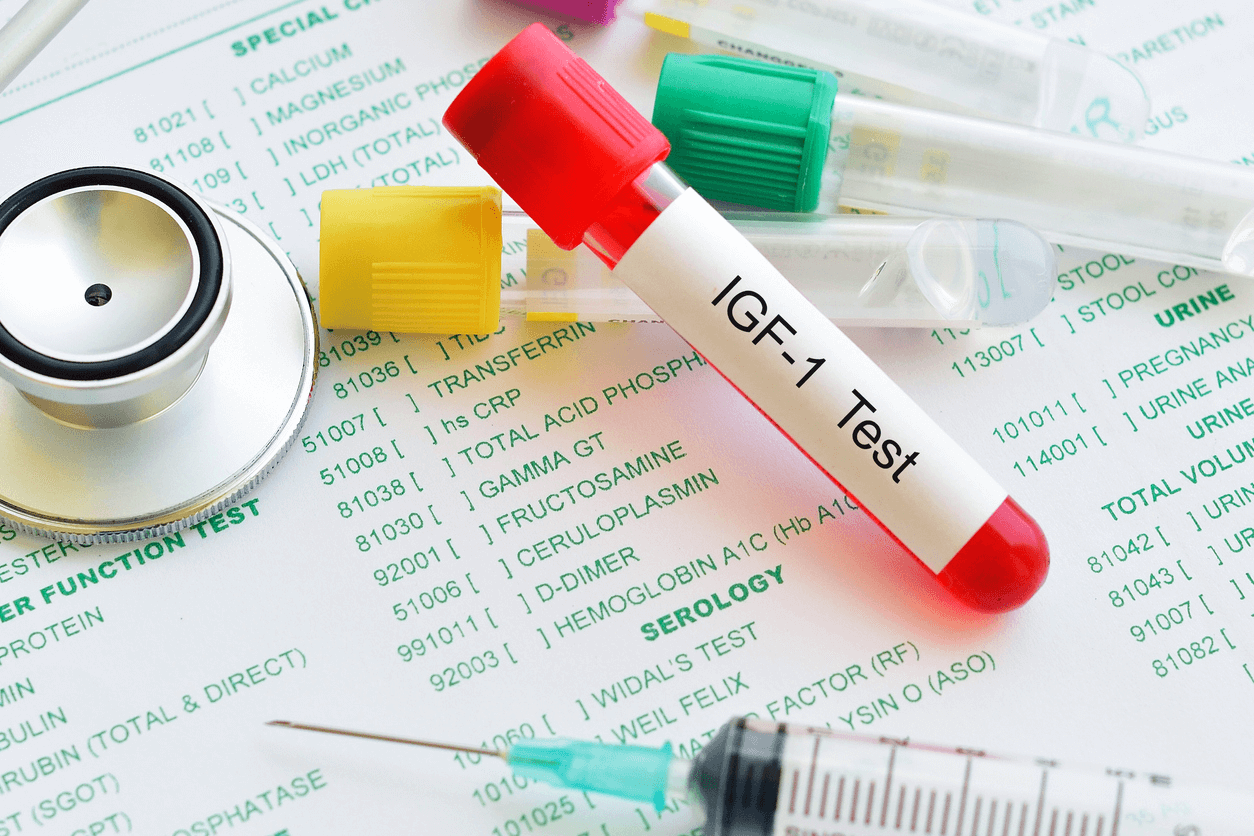
Growth hormone dosing for adults with AGHD is carefully adjusted or “titrated” based on individual responses monitored through IGF-1 levels. The titration process typically involves beginning treatment with a conservative dose of HGH injections, followed by regular monitoring of IGF-1 levels, and gradually adjusting the dose upwards or downwards to achieve optimal therapeutic effectiveness.
According to a detailed analysis in the aforementioned study published in the Journal of Clinical Endocrinology and Metabolism, titrating HGH injections using IGF-1 levels helps clinicians fine-tune therapy to meet the exact physiological needs of each patient. This method has demonstrated considerable efficacy, improving clinical outcomes while minimizing adverse effects associated with inappropriate dosing.
Why Is Monitoring and Personalized Growth Hormone Dosing Important to Success?
Clinical studies have proved, that personalized HGH dosing based on a routine IGF-1 sampling schedule is essential because individual dose-response effects to HGH therapy vary significantly. Precise, personalized dosing prevents suboptimal treatment scenarios such as under-dosing—which may not fully alleviate symptoms of AGHD—or over-dosing, which could increase risks of side effects.
Recent research emphasizes the advantages of personalized HGH therapy, indicating enhanced clinical outcomes such as improved energy levels, enhanced glucose metabolism, improved cardiovascular function, enhanced cognitive functions, better body composition, and overall improved quality of life. In their study, authors from Frontiers in Endocrinology found that patients managed with personalized IGF-1 blood samples reported significant improvements in physical and psychological health markers compared to standardized dosing approaches.
Why Is IGF-1 Monitoring Critical for HGH Safety?

IGF-1 monitoring is indispensable for ensuring the safety of patients undergoing HGH therapy. High IGF-1 levels, which indicate excessive HGH dosage, can cause numerous side effects such as joint swelling, fluid retention, insulin resistance, and potential cardiovascular risks. Conversely, insufficient IGF-1 levels signal under-dosing, potentially leaving symptoms unresolved.
Scientific evidence, as in the studies thus far cited in this article, highlights the critical role IGF-1 monitoring plays in identifying and correcting dosage errors early. This proactive monitoring approach significantly mitigates adverse effects, enhances patient safety, and ensures the therapy remains within a therapeutic, beneficial range. Regular IGF-1 monitoring thus helps clinicians maintain HGH therapy within an optimal and safe dosing window.
How to Ensure That You Are Getting the Safest and Most Effective HGH Therapy
Why Choose The HGH Therapy Doctor for Your HGH Therapy?
At The HGH Therapy Doctor, we prioritize patient care, safety, and successful treatment outcomes above all else. Our specialized team utilizes state-of-the-art IGF-1 monitoring methods to precisely tailor HGH dosing to your unique physiological responses. We emphasize comprehensive care plans, personalized treatment strategies, and consistent monitoring to guarantee optimal therapeutic effectiveness.
Our clinic ensures that each patient receives a carefully managed and scientifically backed HGH therapy regimen. With regular IGF-1 assessments, our specialists proactively adjust your treatment to maintain therapeutic effectiveness while minimizing risks. Our evidence-based approach, supported by peer-reviewed clinical research, demonstrates our commitment to providing the safest and most effective HGH therapy available.
When you choose The HGH Therapy Doctor, you benefit from:
- Expert healthcare providers specializing in growth hormone deficiency
- Personalized care plans based on precise IGF-1 monitoring
- Continuous adjustments and monitoring to ensure maximum effectiveness and safety
- Advanced, evidence-based treatment strategies supported by academic research
By partnering with The HGH Therapy Doctor, you invest in your long-term health and well-being, ensuring your HGH therapy provides optimal results, safely and effectively.
Now that you understand how critical it is to work with an HGH Therapy Clinic that understands the intricacies of HGH dosing and monitoring, why not Contact Us today and work with the experts!